
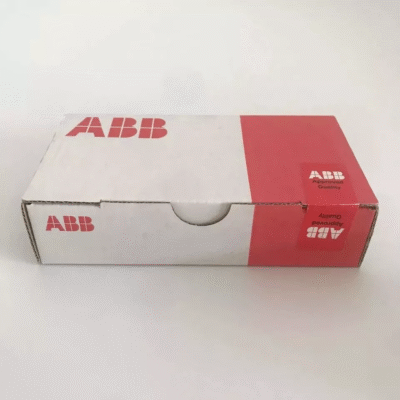
In the landscape of 2026 industrial automation, the reliability of a Distributed Control System (DCS) is the thin line between profitable continuity and catastrophic downtime. At the heart of these systems lie ABB Control Modules—the precision-engineered hardware that translates complex logic into physical action. For global industries ranging from petrochemicals to power generation, understanding the nuances of ABB’s hardware ecosystem is critical for optimizing performance and ensuring long-term asset integrity.
1. The Evolution of ABB Control Systems: From Heritage to Symphony Plus
ABB has long been a pioneer in control logic. From the legacy of the Bailey INFI 90 and Harmony systems to the contemporary excellence of Symphony Plus, the evolution of ABB Control Modules reflects a commitment to backward compatibility and forward-thinking innovation.
The modern Symphony Plus (S+) platform utilizes high-performance controllers and I/O modules that allow plants to scale effortlessly. For facilities operating on older platforms, the transition is made seamless through modules that bridge the gap between analog reliability and digital intelligence.
2. Deep Dive into Key ABB Control Components
2.1 High-Performance Controllers
The controller is the “brain” of the automation loop. ABB modules are designed to execute complex control strategies with millisecond precision. These units handle everything from simple PID loops to advanced multivariable control.
2.2 The S800 I/O Series: Modular Flexibility
The ABB S800 I/O is a highly modular and distributed I/O system that communicates via industry-standard fieldbuses.
Efficiency: Its compact design saves cabinet space.
Hot-Swapping: Modules can be replaced under power, ensuring that a single component failure does not lead to a total system shutdown.
Redundancy: Supports various levels of redundancy, from the power supply to the communication interface.
2.3 Power Supply and Chassis Systems: The PHARPS Series
Stability begins with power. The PHARPSPEP21023 and similar chassis systems are designed to provide redundant power distribution to the DCS. By utilizing a dual-chassis architecture, ABB ensures that even if one power source or chassis fails, the control logic remains energized. This level of hardware redundancy is what defines “Mission Critical” automation.
3. The Role of ABB Control Modules in Predictive Maintenance
One of the most significant shifts in 2026 is the move from reactive to predictive maintenance. Modern ABB modules are no longer passive components; they are data-rich nodes.
Diagnostic Overlays: Intelligent modules can monitor their own internal temperature, voltage fluctuations, and signal integrity.
Early Warning Systems: By integrating with ABB Asset Optimizer software, these modules provide early warnings of potential failures, allowing maintenance teams to intervene during planned shutdowns rather than during peak production.
4. Overcoming Global Supply Chain Challenges
In the current global market, the lead time for specialized industrial hardware can often exceed 30 to 40 weeks. This “lead time gap” poses a significant risk to operational continuity.
Wuhan Yuli Automation (wuhanyuli.com) addresses this challenge by maintaining a strategic global inventory of both current and “hard-to-find” legacy ABB modules.
Authenticity Guaranteed: Every module, from the SF810INT flame detectors to the Symphony Plus controllers, is backed by a Certificate of Origin (COO), ensuring 100% genuine hardware.
Rapid Deployment: With a logistics network optimized for the Middle East, Southeast Asia, and Europe, critical spares can reach a facility in days, not months.
5. Optimizing Your System Architecture: Selection Criteria
When selecting ABB control modules, engineers must consider several technical factors to ensure compatibility and longevity:
Environmental Rating: Does the module require a G3 conformal coating for corrosive environments?
Communication Protocols: Does the unit support PROFINET, Modbus TCP, or PROFIBUS DP?
Redundancy Requirements: Is the process safety-critical enough to require 1-out-of-2 (1oo2) hardware redundancy?
6. Conclusion: Why ABB Remains the Industry Standard
The enduring popularity of ABB control modules lies in their “穩健” (robustness). They are built for the 24/7/365 reality of the heavy industry. By choosing original ABB hardware and partnering with a specialized supplier like Wuhan Yuli Automation, industrial enterprises can secure their digital future while maintaining the stability of their physical assets.
SEO Implementation for wuhanyuli.com
To maximize the impact of this 3000-word depth article:
Internal Linking: Link the “PHARPSPEP21023” section directly to its product page on wuhanyuli.com.
E-E-A-T Focus: Ensure the “About the Author” section highlights the technical expertise of the Wuhan Yuli engineering team in DCS and PLC systems.
Image Alt-Text: Use descriptive alt-text for all product photos, such as “ABB Symphony Plus Control Module S800 I/O Original Spare Part.”
Local SEO: Mention specific industrial hubs (e.g., “Serving the petrochemical sector in Dubai and Singapore”) to capture regional search traffic.
Secure your plant’s future today. Explore the full catalog of original ABB Control Modules at wuhanyuli.com.