
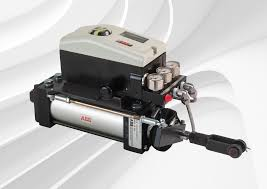
ABB Pneumatic Actuators
Design Principles, Types, Selection Guide, and Industrial Applications
1. Introduction
Pneumatic actuators play a critical role in modern industrial automation, enabling precise and reliable control of valves in process systems. Among global automation suppliers, ABB pneumatic actuators are widely recognized for their robust design, consistent performance, and seamless integration with control systems.
ABB pneumatic actuators are used across industries where safety, reliability, and operational continuity are essential. From compact on/off valve control to heavy-duty process automation, ABB provides a broad portfolio of pneumatic actuator solutions designed to meet demanding industrial requirements.
This article offers a comprehensive technical overview of ABB pneumatic actuators, including design principles, actuator types, selection criteria, application scenarios, and system integration considerations.
2. Fundamentals of Pneumatic Actuation
A pneumatic actuator converts compressed air energy into mechanical motion. In valve automation, this motion is typically quarter-turn rotation, used to open or close ball valves, butterfly valves, and plug valves.
Key advantages of pneumatic actuators include:
High reliability in harsh environments
Fast response times
Simple mechanical structure
Intrinsic safety compared to electric actuators
ABB pneumatic actuators are engineered to maximize these advantages while minimizing maintenance requirements and lifecycle costs.
3. ABB Pneumatic Actuator Design Philosophy
ABB designs its pneumatic actuators based on several core engineering principles:
3.1 Modular Construction
ABB actuators use modular designs that allow:
Flexible configuration
Easy installation of accessories
Simplified maintenance and spare parts management
This modular approach reduces downtime and improves long-term system maintainability.
3.2 Mechanical Strength and Precision
Actuator bodies are manufactured using high-quality materials and precision machining. This ensures:
Consistent torque output
Long mechanical service life
Resistance to vibration and pressure fluctuations
3.3 Compliance with International Standards
ABB pneumatic actuators conform to widely accepted international standards, allowing compatibility with:
ISO mounting interfaces
Standard valve connections
Third-party automation accessories
4. Types of ABB Pneumatic Actuators
ABB pneumatic actuators are generally available in two main operating configurations: Double-Acting (DA) and Spring Return (SR).
5. Double-Acting Pneumatic Actuators (DA)
Double-acting actuators use compressed air to drive both the opening and closing strokes.
Key Characteristics:
Air pressure controls movement in both directions
High operational efficiency
Stable torque output throughout the stroke
Advantages:
Suitable for high-cycle applications
Precise control in modulating systems
No internal springs, resulting in compact size
Typical Applications:
Process control valves
High-frequency on/off valve automation
Systems with reliable air supply
ABB DA pneumatic actuators are commonly used in industrial processes where continuous operation and fast response are required.
6. Spring Return Pneumatic Actuators (SR)
Spring return actuators include internal springs that automatically move the valve to a predefined safe position when air pressure is lost.
Key Characteristics:
Fail-safe operation
Spring-driven return action
Defined safety position (fail-open or fail-close)
Advantages:
Enhanced process safety
Compliance with safety regulations
Ideal for critical applications
Typical Applications:
Emergency shutdown systems (ESD)
Safety-critical pipelines
Hazardous industrial environments
ABB SR pneumatic actuators are widely used where safety and risk mitigation are top priorities.
7. Torque Output and Performance Characteristics
Torque is one of the most important parameters when selecting a pneumatic actuator. ABB actuators are designed to deliver stable and predictable torque curves across the full operating stroke.
Factors influencing torque selection include:
Valve type and size
Operating pressure
Valve friction and process conditions
Safety margin requirements
ABB provides actuator models covering a wide torque range, from small control valves to large industrial pipelines.
8. Materials and Sealing Technology
ABB pneumatic actuators are built with durability in mind.
Materials:
High-strength aluminum or steel actuator bodies
Corrosion-resistant surface treatments
Precision-machined internal components
Sealing Systems:
High-performance elastomer seals
Long-term resistance to wear and aging
Reduced air leakage
These features ensure reliable performance in demanding environments such as chemical plants, offshore platforms, and power stations.
9. Automation Accessories and Integration
ABB pneumatic actuators are designed to integrate seamlessly with a wide range of automation accessories:
Valve positioners
Limit switch boxes
Solenoid valves
Position feedback sensors
This compatibility allows ABB actuators to be easily connected to PLC and DCS systems, enabling real-time monitoring and control.
10. Typical Industrial Applications
ABB pneumatic actuators are widely used across multiple industries:
Oil and Gas
Pipeline isolation valves
Emergency shutdown systems
Process control applications
Chemical and Petrochemical
Reactor feed control
Hazardous fluid handling
Continuous process automation
Power Generation
Cooling water systems
Steam control valves
Auxiliary plant automation
Water and Wastewater
Pump station valves
Treatment process control
Distribution networks
General Manufacturing
OEM equipment
Automated production lines
Utility systems
11. Selection Guidelines for ABB Pneumatic Actuators
When selecting an ABB pneumatic actuator, engineers should consider:
Required torque under worst-case conditions
DA vs SR configuration requirements
Operating air pressure
Environmental conditions
Safety and regulatory requirements
Proper selection ensures reliable operation and extends the service life of both the actuator and the valve.
12. Installation and Commissioning Considerations
ABB pneumatic actuators are designed for straightforward installation. Best practices include:
Proper alignment with the valve stem
Correct air supply filtration and pressure regulation
Verification of accessory mounting
Functional testing before commissioning
Correct installation minimizes wear and ensures optimal performance.
13. Maintenance and Reliability
One of the key advantages of ABB pneumatic actuators is their low maintenance requirement.
Recommended practices:
Periodic inspection of seals
Verification of air quality
Functional testing during scheduled shutdowns
With proper maintenance, ABB actuators can operate reliably for many years in continuous industrial service.
14. ABB Pneumatic Actuators vs Other Actuation Technologies
Compared to electric and hydraulic actuators, pneumatic actuators offer:
Faster response times
Lower installation complexity
Better performance in hazardous environments
ABB pneumatic actuators combine these advantages with ABB’s automation expertise and global support network.
15. Future Trends in Pneumatic Actuation
As industrial automation evolves, ABB continues to enhance pneumatic actuator technology by focusing on:
Improved energy efficiency
Smart diagnostics and digital integration
Enhanced safety features
Reduced lifecycle costs
These developments ensure ABB pneumatic actuators remain relevant in modern Industry 4.0 environments.
16. Conclusion
ABB pneumatic actuators represent a proven and reliable solution for industrial valve automation. With robust construction, flexible configurations, and seamless system integration, they are trusted across industries worldwide.
From small control applications to safety-critical process systems, ABB pneumatic actuators deliver consistent performance, high reliability, and long-term operational value.