

ABB Bailey SPNIS21 English Product Description (≈2000 words)
The ABB Bailey SPNIS21 Network Interface Card strengthens industrial control systems, and it consistently enhances connectivity across complex distributed architectures. The module supports high-speed data handling, and it also ensures fully synchronized communication among multiple nodes. Moreover, it introduces robust diagnostic intelligence, and it steadily increases operational continuity across DCS platforms. Because modern plants require uninterrupted data flow, the SPNIS21 fits seamlessly into ABB Bailey INFI 90 and compatible system infrastructures.
To begin with, the SPNIS21 streamlines network communication, and it also reduces control latency across long-distance system links. Additionally, it supports deterministic data exchange, and it synchronizes message flow across redundant controllers, remote interfaces, and advanced process stations. Through its superior signal integrity design, the card stabilizes communication even in electrically noisy factory environments. Consequently, operators maintain continuous visibility into process behavior, and they also respond to real-time data without disruption.
1. System Integration and Architecture
The SPNIS21 aligns with the INFI-NET architecture, and it directly manages network messaging for plant-wide distributed control. Since industrial environments constantly expand, the card supports scalable topologies, and it also handles high node counts while maintaining reliable throughput. Furthermore, the module ensures consistent message timing, and it coordinates multi-node communication without jitter or delay. This improves the accuracy of supervisory tasks and real-time process coordination.
Additionally, the SPNIS21 anchors high-availability system configurations, and it supports seamless redundancy. Engineers deploy dual-loop network paths, and the card switches communication routes instantly when link conditions change. Plant networks therefore sustain continuous uptime, and they also maintain data integrity under all workload conditions.
2. Electrical Characteristics
The SPNIS21 maintains well-defined electrical parameters, and it operates with controlled power consumption. It uses regulated power from the backplane, and it stabilizes its internal circuits with precision-designed noise suppression. Therefore, long-term operation keeps system temperatures controlled, and it also protects nearby modules from interference. Typically, the module draws low current, and it improves overall chassis power efficiency.
Signal voltage levels align with ABB Bailey communication standards, and the card also maintains strict common-mode rejection. Because industrial plants often contain high-power machinery, the SPNIS21 withstands typical electromagnetic disturbances. Furthermore, its Clipper-protected circuits handle signal spikes, and they shield the microprocessor logic from transient events.
3. Mechanical Form and Durability
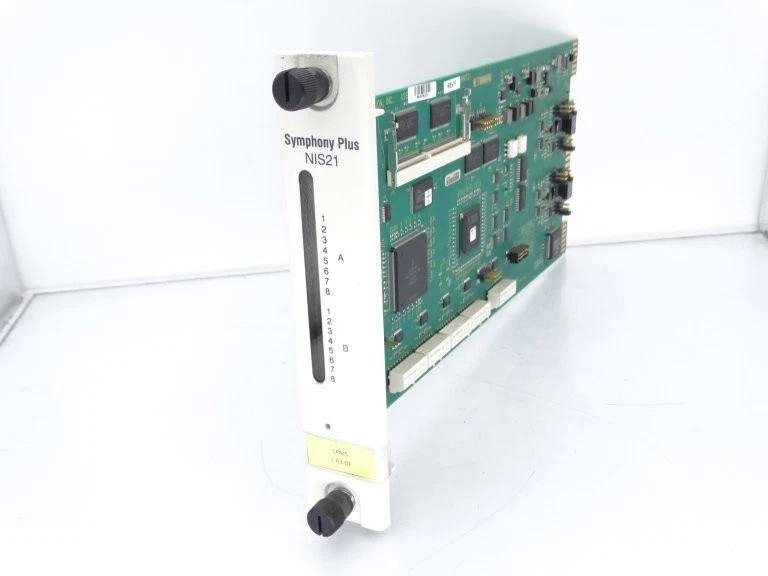
The SPNIS21 uses the standard Bailey-style printed circuit assembly, and it fits directly into ABB Bailey mounting structures. Its rugged PCB design maintains long-term structural stability, and it resists vibration stress from rotating equipment environments. Engineers also gain access to clearly labeled connectors, front diagnostic LEDs, and rear backplane pins that align with ABB Bailey communication buses.
To enhance service life, the module uses industrial-grade components, and it withstands extended temperature ranges across typical factory conditions. Because many installations operate continuously for decades, the SPNIS21 preserves high performance through its reinforced board layout and oxidation-resistant contact plating.
4. Network Functionality and Signal Handling
The SPNIS21 supports high-integrity data encoding, and it also manages error detection checks at multiple protocol layers. When the network experiences noise or intermittent transmission differences, the card identifies the anomaly instantly, and it corrects the message flow before the system notices any instability. This real-time error management strengthens the reliability of supervisory control stations.
Data buffering algorithms inside the module coordinate message sequences, and they prevent data collisions even during peak communication loads. Because modern plants rely on increasingly dense device networks, the card’s buffer efficiency ensures stable system throughput. Additionally, its deterministic timing logic ensures predictable cycle times, and it protects time-sensitive control sequences from drift.
5. Processing Capabilities
The SPNIS21 integrates a dedicated communication processor, and it manages packet routing, checksum verification, handshake control, and network arbitration. This removes load from the main controller modules, and it optimizes total platform efficiency. Because the card operates independently, the system experiences lower communication delays, and it maintains synchronization across multiple process stations.
Moreover, the SPNIS21 logs diagnostic events, and it gives engineers continuous insight into network behavior. It detects connection degradation early, and it reports signal health status to supervisory systems. This improves maintenance planning and reduces unplanned downtime.
6. Diagnostic Intelligence
The SPNIS21 features advanced diagnostics across hardware, communication ports, and network signal processing. The module monitors internal temperature, communication quality, message retry counts, and error events. Engineers also monitor card status through front LEDs that indicate power, link activity, data flow, and operational conditions.
Because diagnostic clarity improves system stability, the SPNIS21 logs warnings whenever network latency increases. It also reports packet discard events, cable resistance anomalies, and loop voltage irregularities. Therefore, plant technicians identify potential infrastructure issues long before system performance drops.
7. System Compatibility
The SPNIS21 integrates smoothly with:
ABB Bailey INFI 90 systems
Bailey Network Management structures
Process stations, host computers, and communication gateways
Redundant control architectures
The module synchronizes cleanly with ABB Bailey protocol timing, and it aligns with legacy communication loops as well as upgraded architectures. Plants that modernize existing systems continue using the SPNIS21 without modification, and they also expand control capability without compatibility issues.
8. Environmental Tolerance
The SPNIS21 sustains operation across extended industrial climate ranges. It runs reliably across fluctuating temperatures, humidity swings, and typical airborne industrial contaminants. The PCB surface receives protective treatments, and the module also resists minor chemical exposure common in refinery or process manufacturing environments.
Furthermore, shock and vibration tolerance ensure stable performance inside large power plants, metal mills, petrochemical units, and heavy-equipment facilities. Even when surrounding machinery accelerates vibration levels, the SPNIS21 remains stable and maintains continuous network communication.
9. Reliability and Lifecycle Strength
The SPNIS21 upholds ABB Bailey’s long-term reliability standards. Through its robust hardware design, the card supports continuous operation across many years of service. Additionally, the card’s low thermal load reduces component fatigue, and it improves total lifecycle expectancy.
Because many ABB Bailey systems remain operational for decades, the SPNIS21 helps preserve compatibility while elevating network performance. This reduces modernization costs and maintains predictable system behavior across entire facilities.
10. Key Technical Specifications
| Parameter | Specification |
|---|---|
| Module Type | Network Interface Card |
| System Integration | ABB Bailey INFI 90 |
| Communication Role | Network message routing and timing |
| Power Source | Backplane supplied (regulated) |
| Processing | Dedicated communication microprocessor |
| Diagnostics | LED indicators, internal event reporting |
| Environmental Range | Industrial-grade temperature and humidity tolerance |
| Compatibility | Legacy and modern ABB Bailey architecture |
| Signal Design | High-integrity encoding, error detection, noise rejection |
| Mechanical Format | Bailey-style card with reinforced PCB |
Conclusion
The ABB Bailey SPNIS21 strengthens industrial network reliability, and it consistently enhances communication throughput across complex distributed control systems. Because modern plants demand stable data flow, the module improves message timing, reduces latency, and amplifies diagnostic visibility. Through its durable construction and intelligent processing architecture, the SPNIS21 supports long-term industrial operations with precision and consistency. As a result, system integrators gain dependable connectivity, optimized control performance, and sustainable network scalability across global automation infrastructures.

Reviews
There are no reviews yet.