


The ABB HARMONY BRC300 bridge controller delivers high-performance industrial automation control because it provides precise processing, seamless data communication, and robust system reliability. Modern industrial environments require accurate synchronization between multiple subsystems, and the BRC300 supports these demands through its efficient bus management and advanced control architecture. Engineers value this controller for its compact form factor, flexible connectivity, and consistent operation in both standard and complex control networks.
The controller integrates tightly with ABB automation platforms, enabling smooth communication between processors, I/O modules, and supervisory systems. Consequently, industrial users achieve stable system behavior and predictable process outcomes. The BRC300 also reduces configuration complexity and accelerates deployment, allowing maintenance teams to manage large-scale automation networks efficiently.
1. Core Functional Role
The BRC300 functions as a central bridge controller that manages communication and coordination across multiple ABB devices. It supports high-speed data transfer, bus arbitration, and system monitoring. Because industrial operations often involve concurrent control loops, the BRC300 ensures that each subsystem receives timely commands and status updates. The controller also prioritizes critical signals to maintain uninterrupted operation during peak loads.
Additionally, the BRC300 enhances network stability by managing traffic between legacy modules and modern digital systems. This capability allows plants to upgrade automation infrastructure without redesigning the cabinet layout, supporting gradual expansion and modernization.
2. Key Features
2.1 High-Speed Bus Management
The BRC300 optimizes communication across multiple nodes, reducing latency and preventing signal collision. It ensures deterministic data flow, which is critical for time-sensitive applications in power generation, chemical plants, and manufacturing lines.
2.2 Reliable Signal Handling
The controller monitors all incoming and outgoing signals, identifies errors immediately, and maintains signal integrity across connected devices. These features prevent data corruption and support high-accuracy control loops, minimizing operational risks.
2.3 Advanced Diagnostic Capabilities
Front-panel indicators and integrated diagnostic software provide real-time insight into controller status, bus activity, and communication health. Maintenance teams can quickly identify anomalies, reducing downtime and improving overall system efficiency.
2.4 Seamless Integration
The BRC300 supports ABB standard cabinet layouts and mechanical interfaces, enabling fast installation and replacement. The controller adapts to both existing and new systems, allowing incremental upgrades without operational disruption.
3. Technical Specifications
Operating Voltage: Compatible with ABB cabinet standards
Power Consumption: Optimized for low energy dissipation and thermal stability
Bus Compatibility: Supports ABB industrial bus protocols
Communication Rate: High-speed deterministic data transfer
Environmental Tolerance: Operates within wide temperature and humidity ranges
EMC Compliance: Built-in shielding minimizes electromagnetic interference
Vibration Resistance: Reinforced design withstands industrial vibrations
These specifications make the BRC300 ideal for demanding industrial environments where stability, speed, and reliability are essential.
4. Mechanical Design
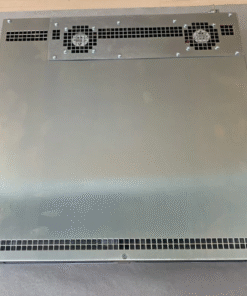
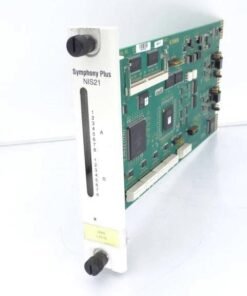
The BRC300 features a robust enclosure suitable for industrial cabinets. Its modular design ensures secure backplane engagement and vibration-resistant connections. Front-panel LEDs indicate operational status, error conditions, and communication activity, simplifying monitoring and maintenance. The compact design allows multiple controllers to coexist within a single cabinet while maintaining airflow and thermal management.
5. Environmental Resilience
The controller operates reliably under industrial conditions, including fluctuating temperatures, high humidity, and mechanical vibration. The design incorporates thermal management strategies and shock-resistant components, ensuring continuous operation in harsh environments. This resilience makes the BRC300 suitable for chemical plants, manufacturing facilities, and power stations.
6. Integration and Deployment
The BRC300 integrates easily into ABB automation systems. Installation follows a clear workflow:
Insert the controller into the designated cabinet slot.
Align and secure the module with the backplane connector.
Connect bus lines according to ABB protocol standards.
Verify status indicators to confirm healthy operation.
Register the controller in the ABB configuration software.
This structured deployment allows for rapid commissioning and minimal disruption to existing operations.
7. Reliability and Lifecycle Performance
ABB designs the BRC300 with high-quality components to support long-term industrial use. Its advanced thermal management, error-handling mechanisms, and robust communication protocols minimize maintenance needs. Engineers benefit from consistent performance, predictable control behavior, and reduced downtime, ensuring smooth operation across extended plant lifecycles.
8. Application Scenarios
The BRC300 bridge controller suits multiple industries, including:
Manufacturing automation
Chemical and petrochemical processing
Water treatment and distribution
Power generation plants
Material handling and logistics systems
In all these applications, the BRC300 ensures precise signal management, reliable control, and seamless integration across complex automation networks.
Conclusion
The ABB HARMONY BRC300 bridge controller strengthens industrial automation by offering high-speed bus management, reliable signal integrity, and robust environmental resilience. It integrates effortlessly with ABB control systems, supports incremental upgrades, and ensures continuous operational stability. Plants adopt the BRC300 when they require precise, efficient, and dependable bridge control to maintain high-quality performance across complex industrial networks.
Reviews
There are no reviews yet.