
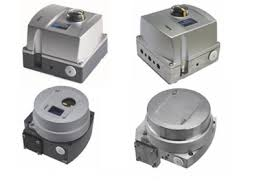
VALMET ND9103HNT Smart Valve Positioner
An Engineering-Driven Technical Analysis for Industrial Process Control
1. Engineering Context of Smart Valve Positioners
In industrial automation systems, control valves serve as the final execution element that directly influences process variables such as flow, pressure, temperature, and level. While modern DCS and PLC platforms generate highly accurate control signals, the actual control performance at the field level depends heavily on the valve positioner.
From an engineering standpoint, a valve positioner must compensate for mechanical friction, actuator nonlinearity, air supply fluctuations, and environmental disturbances. The stability of this compensation determines loop performance, process safety, and long-term equipment reliability.
The VALMET ND9103HNT belongs to the ND9000 intelligent positioner family and is designed to provide predictable, stable, and diagnosable valve positioning in demanding industrial environments.
2. Product Positioning and Application Scope
The ND9103HNT is positioned as a smart valve positioner for continuous process control rather than intermittent or low-duty applications. It is commonly applied in:
Oil and gas production and transportation facilities
Chemical and petrochemical process units
Power generation and auxiliary systems
Pulp, paper, and process manufacturing industries
Utilities with high reliability and uptime requirements
From an engineering perspective, ND9103HNT is selected when consistent control behavior and long service life are more critical than minimal initial cost.
3. Operating Principle and Control Architecture
3.1 Signal Processing Logic
The ND9103HNT receives a standard control signal from the automation system. Internally, the signal is processed by a microprocessor-based control unit that performs:
Input signal filtering
Linearization of valve characteristics
Dynamic compensation for actuator behavior
This architecture ensures that the valve response remains consistent even when external conditions change.
3.2 Closed-Loop Valve Position Control
A built-in high-resolution position sensor continuously measures valve stem movement. The measured position is compared with the command signal, forming an internal closed-loop control system.
This closed-loop design allows ND9103HNT to minimize the impact of:
Actuator friction and hysteresis
Packing wear over time
Supply air pressure variations
As a result, valve positioning accuracy is maintained throughout the operational lifecycle.
4. Mechanical Design and Industrial Durability
4.1 Housing and Environmental Resistance
The ND9103HNT is built with an industrial-grade enclosure suitable for harsh field environments. Its mechanical structure is engineered to resist vibration, dust, humidity, and temperature variations without degrading control performance.
This durability is particularly important in outdoor installations and heavy industrial plants where environmental conditions cannot be tightly controlled.
4.2 Pneumatic Structure and Actuator Interface
The internal pneumatic design focuses on stable and repeatable air delivery. Optimized air paths reduce response delay and improve positioning consistency.
The positioner is compatible with a wide range of pneumatic actuators, supporting both linear and rotary valve applications, which simplifies engineering standardization across multiple plants.
5. Integration with DCS and PLC Systems
5.1 Control System Compatibility
From a system integration perspective, ND9103HNT interfaces smoothly with mainstream DCS and PLC platforms. Its predictable response behavior aligns well with standard PID tuning practices, reducing commissioning time and loop adjustment effort.
Clear separation between mechanical, pneumatic, and control parameters allows engineers to troubleshoot systematically rather than relying on trial-and-error adjustments.
5.2 Diagnostic and Feedback Capabilities
The ND9103HNT provides diagnostic data related to valve movement, response behavior, and internal operating conditions. These diagnostics support condition-based maintenance strategies and help identify early signs of mechanical wear or abnormal operating conditions.
6. Installation Engineering Considerations
6.1 Mechanical Installation Requirements
Proper installation is essential for achieving the intended performance. Key engineering considerations include:
Accurate alignment between valve stem and feedback mechanism
Avoidance of external mechanical stress on the positioner
Correct selection of mounting kits for the actuator type
Improper installation can introduce measurement errors that cannot be corrected by parameter tuning alone.
6.2 Pneumatic and Electrical Connections
Use clean, dry instrument air to prevent internal contamination
Minimize tubing length and pressure drop
Apply proper grounding and shielding to reduce electrical noise
These practices improve signal stability and long-term reliability.
7. Commissioning and Parameter Configuration
Commissioning should follow a structured engineering sequence:
Verify mechanical alignment
Confirm air supply stability
Configure basic control parameters
Perform automatic calibration if available
Validate response under real process conditions
Although ND9103HNT supports automated tuning features, final adjustments should always be validated against actual process behavior.
8. Operational Reliability and Maintenance Strategy
The ND9103HNT is designed for long-term operation with minimal maintenance. However, preventive maintenance remains critical in industrial environments.
Recommended practices include:
Periodic inspection of air supply quality
Review of diagnostic data for abnormal trends
Mechanical inspection during scheduled shutdowns
These actions help prevent unplanned downtime and extend the service life of both the valve and the actuator.
9. Common Engineering Issues and Analysis Approach
9.1 Slow or Delayed Valve Response
This condition is typically related to air supply limitations, actuator friction, or conservative tuning parameters. Engineers should evaluate mechanical and pneumatic factors before modifying control settings.
9.2 Control Loop Instability
Oscillation may result from aggressive tuning, mechanical backlash, or improper installation. A systematic analysis of loop dynamics and hardware condition is required to resolve the issue effectively.
10. Value in Industrial Applications
In real industrial operations, ND9103HNT delivers value by:
Improving control loop stability
Reducing maintenance frequency
Supporting predictive maintenance strategies
Enhancing overall plant availability
These benefits contribute directly to lower lifecycle costs and improved operational safety.
11. Engineering-Based Selection Considerations
When selecting ND9103HNT, engineers should consider:
Valve and actuator characteristics
Required positioning accuracy
Environmental conditions
Maintenance and diagnostic expectations
A structured selection process ensures that the positioner supports long-term operational objectives rather than short-term installation convenience.
12. Conclusion
The VALMET ND9103HNT smart valve positioner is an engineering-oriented solution designed for reliable valve control in demanding industrial environments. Its intelligent control architecture, robust mechanical design, and system integration capabilities make it suitable for critical process applications.
When installed, commissioned, and maintained according to engineering best practices, ND9103HNT provides stable performance, predictable behavior, and long-term operational confidence—key requirements for modern industrial automation systems.