
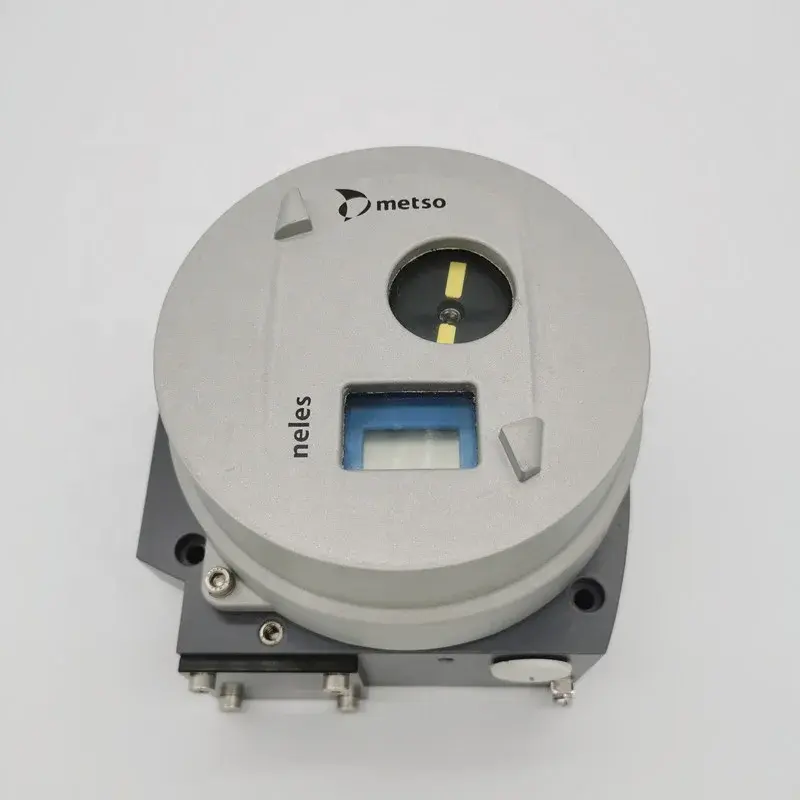
VALMET ND9106HNT Smart Valve Positioner – An Engineering-Driven Technical Analysis
1. The Engineering Role of Valve Positioners in Process Automation
In modern process industries, control valves act as the final control elements that directly regulate flow, pressure, temperature, and level. While the control system generates precise output signals, the actual performance of a control loop largely depends on the valve positioner installed on the actuator.
A valve positioner is not merely a signal amplifier. From an engineering perspective, it is a closed-loop control device that compensates for mechanical friction, supply pressure variation, and environmental disturbances. Its stability and accuracy directly influence process safety, control quality, and equipment lifespan.
Within Valmet’s ND9000 series, the ND9106HNT is positioned as a high-reliability smart valve positioner optimized for demanding industrial applications where long-term stability and predictable behavior are critical.
2. Product Positioning and Typical Application Scenarios
The VALMET ND9106HNT is designed for control valves operating in continuous or safety-critical process environments. Typical application scenarios include:
Oil and gas production and transportation systems
Chemical and petrochemical processing units
Power generation plants and auxiliary systems
Pulp, paper, and process manufacturing industries
Utilities requiring high valve positioning accuracy
From an engineering standpoint, ND9106HNT is selected not only for control accuracy, but also for its resistance to vibration, temperature variation, and electromagnetic interference commonly found in industrial field installations.
3. Working Principle and Control Logic
3.1 Signal Processing Architecture
The ND9106HNT receives a standard control signal from the DCS or PLC. Internally, this signal is processed by a microprocessor that performs filtering, linearization, and dynamic compensation.
Unlike conventional pneumatic positioners, the smart architecture allows the device to adapt its output dynamically, ensuring consistent valve positioning even when process conditions fluctuate.
3.2 Closed-Loop Valve Position Control
A high-resolution position feedback sensor continuously monitors valve stem movement. This feedback is compared with the control command to form a closed internal loop.
This design significantly reduces the effects of:
Actuator friction
Packing wear
Supply air pressure variations
External mechanical disturbances
As a result, ND9106HNT maintains stable valve positioning over long operating periods.
4. Mechanical Design and Industrial Robustness
4.1 Housing and Environmental Protection
ND9106HNT is built with an industrial-grade enclosure suitable for harsh environments. The mechanical structure is engineered to withstand vibration, dust, moisture, and temperature changes without affecting internal signal stability.
This robustness is especially important in outdoor installations and heavy industrial facilities where environmental conditions cannot be fully controlled.
4.2 Pneumatic Structure and Actuator Compatibility
The internal pneumatic layout is designed for fast and stable air delivery to the actuator. Modular air paths reduce internal leakage and improve response consistency.
The positioner is compatible with a wide range of pneumatic actuators, making it suitable for both new installations and retrofit projects.
5. Integration with Control Systems
5.1 DCS and PLC Interface
From a system engineering perspective, ND9106HNT integrates smoothly into modern automation architectures. Its signal handling logic aligns well with standard control loop tuning methods used in DCS and PLC systems.
Clear and predictable response behavior simplifies loop commissioning and reduces tuning time during plant startup.
5.2 Diagnostic and Feedback Capabilities
ND9106HNT provides valuable diagnostic information related to valve movement, positioning behavior, and internal performance indicators. These diagnostics support condition-based maintenance strategies and help engineers identify early signs of mechanical wear or process anomalies.
6. Installation Engineering Considerations
6.1 Mechanical Installation Best Practices
Correct mechanical installation is essential for achieving optimal performance. Key engineering considerations include:
Ensuring precise alignment between valve stem and feedback mechanism
Avoiding external mechanical stress on the positioner housing
Selecting appropriate mounting brackets based on actuator type
Improper alignment can lead to inaccurate feedback and long-term reliability issues.
6.2 Pneumatic and Electrical Connections
Use clean, dry instrument air to prevent internal contamination
Minimize pressure drops in air tubing
Follow grounding and shielding guidelines for electrical connections
These practices improve signal stability and reduce the risk of intermittent faults.
7. Commissioning and Parameter Configuration
Commissioning should follow a structured engineering approach:
Verify mechanical installation
Check pneumatic supply stability
Configure basic control parameters
Perform automatic or guided tuning
Validate valve response under real process conditions
Although ND9106HNT supports automated calibration features, fine-tuning based on actual process behavior is recommended for critical control loops.
8. Operational Reliability and Maintenance Strategy
ND9106HNT is engineered for long service intervals. However, preventive maintenance remains essential for ensuring consistent performance.
Recommended maintenance practices include:
Periodic inspection of air supply quality
Checking feedback mechanism wear
Reviewing diagnostic data for abnormal trends
Such measures help prevent unplanned shutdowns and extend overall system lifespan.
9. Common Engineering Issues and Troubleshooting Approach
9.1 Slow Valve Response
Possible causes include insufficient air pressure, actuator friction, or conservative tuning parameters. Engineers should analyze both mechanical and control factors rather than adjusting parameters blindly.
9.2 Control Loop Oscillation
Oscillation may result from overly aggressive tuning or mechanical backlash. A systematic review of loop dynamics, actuator condition, and positioner settings is required to resolve the issue effectively.
10. Industry Application Value
In real-world industrial environments, ND9106HNT demonstrates value by:
Improving control loop stability
Reducing maintenance frequency
Supporting predictive maintenance strategies
Enhancing overall plant reliability
These benefits translate into lower lifecycle costs and improved process safety.
11. Engineering-Based Selection Guidelines
When selecting ND9106HNT, engineers should evaluate:
Valve and actuator characteristics
Required positioning accuracy
Environmental conditions
Maintenance and diagnostic requirements
A structured selection process ensures the positioner fully supports long-term operational goals.
12. Conclusion
The VALMET ND9106HNT smart valve positioner represents an engineering-focused solution for industrial valve control. Its intelligent control logic, robust mechanical design, and system integration capabilities make it well suited for demanding process environments.
When installed and commissioned according to engineering best practices, ND9106HNT delivers stable performance, reliable diagnostics, and long-term operational confidence—key factors for modern industrial automation systems.