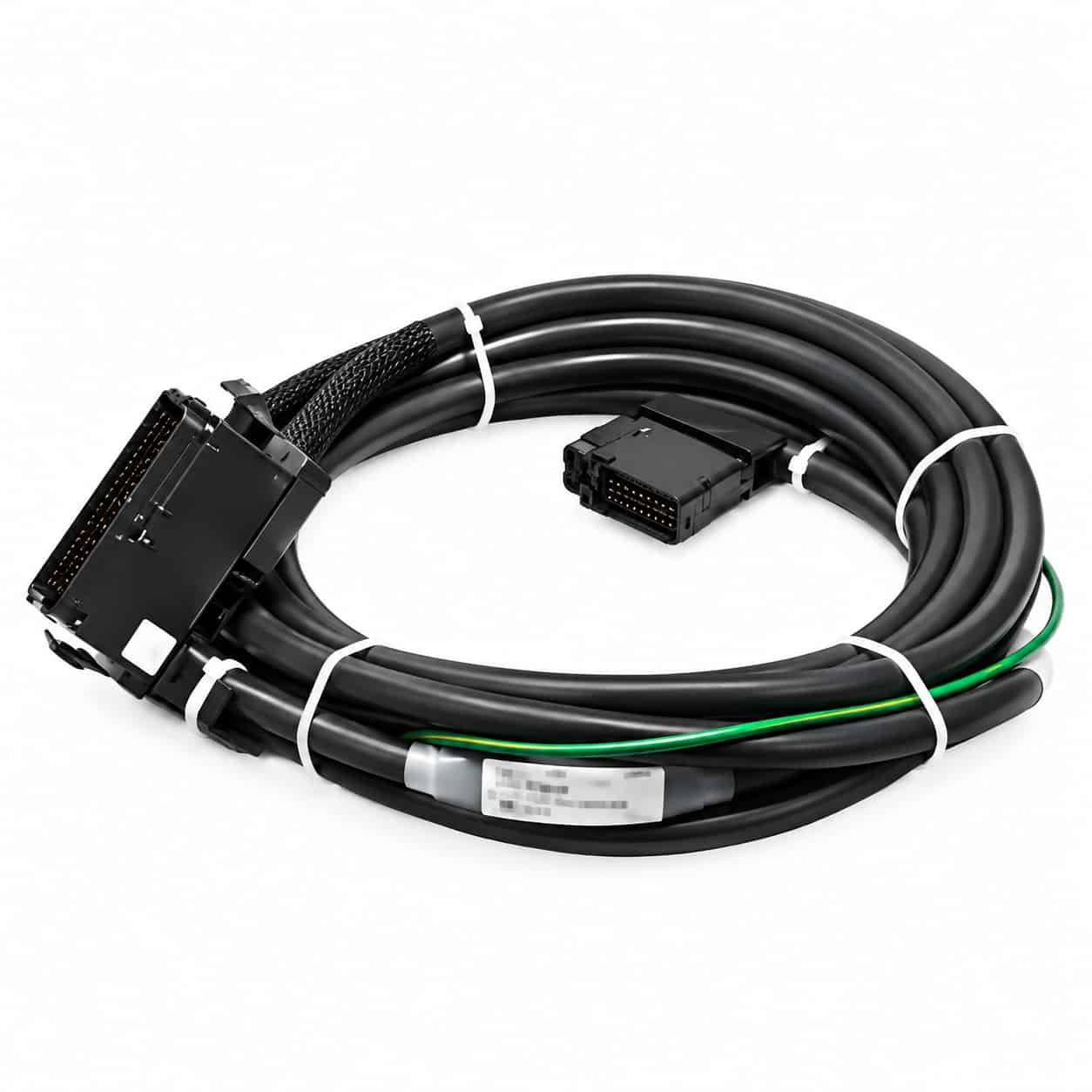
ABB NKDS11-15 Industrial Automation Cable Assembly
The ABB NKDS11-15 industrial automation cable assembly is offered as a purchasing reference alongside four related NKDS11 models: NKDS11-10, NKDS11-20, NKDS11-25 and NKDS11-30. This variable product page helps industrial maintenance teams, engineers and purchasing departments identify the required cable reference for spare parts sourcing and replacement inquiries.
Wuhan Yuli Automation Technology Co., Ltd. assists international customers with industrial automation component procurement. Buyers can select their required model and request information about current availability, pricing and delivery arrangements.
ABB NKDS11-15 Cable – Product Overview
Industrial automation equipment uses various cable assemblies and connection accessories. When a facility requires a replacement component, selecting the correct part number is essential for maintaining accurate purchasing records and avoiding unsuitable substitutions.
The ABB NKDS11 cable references listed here are grouped for convenient ordering. However, grouping these models into one product family does not mean that every version has the same dimensions, wiring arrangement or connector configuration.
Each model should be evaluated against the original equipment documentation. The numerical suffixes in the NKDS11 references have not been independently verified as specific cable lengths or technical specifications.
Maintenance departments often identify replacement accessories through installed equipment labels, engineering drawings, spare parts lists and previous purchase records. These sources provide a more dependable starting point than appearance alone.
Customers should also check the physical cable assembly, where available. Connector photographs, identification labels and equipment details can help clarify an inquiry when the purchasing documentation is incomplete.
This product page focuses on part number identification and sourcing assistance. Exact technical details, including cable construction, electrical characteristics and compatible equipment, must be confirmed through the relevant manufacturer documentation before installation.
ABB NKDS11 Cable Models and Variations
The following five references are included in this WooCommerce variable product. Select the complete model number that matches your purchasing requirements.
| Brand | Model / SKU | Product Category | Availability |
|---|---|---|---|
| ABB | NKDS11-15 | Automation Cable | Confirm by Inquiry |
| ABB | NKDS11-10 | Automation Cable | Confirm by Inquiry |
| ABB | NKDS11-20 | Automation Cable | Confirm by Inquiry |
| ABB | NKDS11-25 | Automation Cable | Confirm by Inquiry |
| ABB | NKDS11-30 | Automation Cable | Confirm by Inquiry |
Important: These models are separate purchasing references. Their interchangeability, cable lengths and connector pin assignments have not been established in this listing.
Features and Purchasing Benefits
Accurate Model Identification
All five references retain their complete model numbers. This allows customers to compare the listing with their maintenance records and communicate the exact item required to the supplier.
Replacement Cable Procurement
Industrial facilities regularly review spare parts requirements during equipment maintenance. A clearly identified cable reference supports purchasing inquiries and reduces uncertainty when sourcing a replacement.
Connection Compatibility Review
Before purchasing an industrial cable assembly, review the original equipment requirements. Cable appearance alone cannot confirm connector compatibility, internal wiring or electrical suitability.
Multiple Model Inquiry Support
Buyers can request NKDS11-10, NKDS11-15, NKDS11-20, NKDS11-25 and NKDS11-30 separately or together. Supplying individual quantities for each reference helps organize the quotation process.
Documentation-Based Purchasing
Equipment manuals, cable labels and engineering drawings should be used whenever possible. Accurate documentation helps maintenance and purchasing teams avoid assumptions about product dimensions or technical functions.
Industrial Applications
Industrial automation cable assemblies are commonly included in spare parts procurement across process industries. The NKDS11 references should only be considered for installations where the required model and compatibility have been verified.
- Power Generation: Maintenance purchasing for installed control equipment.
- Oil and Gas: Replacement component sourcing for automation installations.
- Chemical Processing: Spare parts identification and inventory planning.
- Pulp and Paper: Maintenance support for existing industrial systems.
- Water Treatment: Procurement of documented automation accessories.
- Manufacturing: Cable replacement inquiries and equipment servicing.
These examples describe general purchasing environments. They do not represent confirmed approvals or manufacturer-specified applications for individual NKDS11 models.
ABB NKDS11 Cable Selection Guide
Step 1: Identify the Original Part Number
Confirm whether the equipment requires NKDS11-15, NKDS11-10, NKDS11-20, NKDS11-25 or NKDS11-30. Record the complete reference exactly as it appears in the equipment documentation.
Step 2: Review the Existing Cable Assembly
Check the identification label and both connector ends where accessible. Clear photographs can help explain the requirement, but they should not replace the applicable technical documentation.
Step 3: Confirm Technical Requirements
Review cable dimensions, connector arrangement and equipment compatibility using manufacturer information. Do not interpret the model suffix as a verified measurement without supporting evidence.
Step 4: Submit Your Inquiry
Provide the model number, required quantity, delivery country and relevant equipment details. If several variations are required, identify each one separately.
Step 5: Verify the Commercial Offer
Before ordering, confirm product availability, condition, warranty terms, delivery options and final pricing. The supplier quotation should reflect the exact reference and agreed purchasing conditions.
Explore additional automation accessories in our Industrial Components & Accessories category.
For manufacturer information and technical resources, visit the official ABB website. Confirm model-specific information using the relevant ABB documentation.
Why Choose Wuhan Yuli Automation?
Wuhan Yuli Automation Technology Co., Ltd. is an industrial automation trading company established in 2017. We help international customers source industrial control components, replacement accessories and automation spare parts.
Our product portfolio includes ABB and other industrial automation brands. Customers can contact us for sourcing assistance, quotation requests and international purchasing coordination.
Our standard sales commitment focuses on new original products with at least a one-year warranty, subject to the terms confirmed for each order. Actual availability and supporting documentation are reviewed during the purchasing process.
For NKDS11 cable inquiries, providing complete model references and equipment information helps us understand your requirements and prepare an appropriate commercial response.
Frequently Asked Questions
What is the ABB NKDS11-15 cable?
ABB NKDS11-15 is listed as an industrial automation cable assembly reference for spare parts sourcing. Exact technical specifications and equipment compatibility should be confirmed using appropriate documentation.
Which NKDS11 models are available for inquiry?
This product listing includes NKDS11-15, NKDS11-10, NKDS11-20, NKDS11-25 and NKDS11-30. Each model is a separate selectable variation.
Does NKDS11-20 indicate a particular cable length?
The meaning of the numerical suffix has not been verified. Buyers should consult manufacturer documentation before assigning any length or dimensional specification.
Can NKDS11-15 replace NKDS01-15?
Compatibility between NKDS11 and NKDS01 references has not been established. Do not substitute one model for another without checking the original equipment requirements.
Can I request several models in one quotation?
Yes. Please provide the required quantity for each model, along with the delivery destination and any relevant technical documentation.
How can I confirm availability and pricing?
Send your complete part number and quantity to Wuhan Yuli Automation. Current availability, commercial pricing and shipping arrangements can be discussed during the quotation process.
Request a Quote – ABB NKDS11 Cable Series
Looking for ABB NKDS11-15, NKDS11-10, NKDS11-20, NKDS11-25 or NKDS11-30? Contact Wuhan Yuli Automation for model identification assistance, availability confirmation and current pricing.
Company: Wuhan Yuli Automation Technology Co., Ltd.
Email: sales@wuhanyuli.com
Website: www.wuhanyuli.com
Please Include: Model number, quantity, destination country and relevant equipment documentation.