


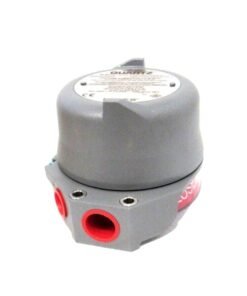
ABB Positioner + Pneumatic Actuator Set V18345-2020521001 + LP10BB10010: Full Technical Introduction
Industrial automation constantly evolves, and engineers continuously search for control solutions that offer accuracy, speed, and mechanical endurance. Although many suppliers attempt to create complete valve-automation packages, the combination of the ABB V18345-2020521001 positioner and ABB LP10BB10010 pneumatic actuator consistently meets the highest performance expectations in modern process-control environments. Because these two devices complement each other extremely well, they form a complete, intelligent, and highly stable valve-control system. Therefore, industries that require strict control accuracy—such as oil and gas, petrochemicals, water treatment, power generation, and manufacturing—frequently choose this ABB set for both new installations and system upgrades.
This article explains the complete architecture of the two components, their integrated advantages, and the engineering principles that allow them to deliver precise and reliable control performance. Furthermore, the article highlights their application scenarios, maintenance requirements, installation considerations, and long-term operational value. Because the content flows smoothly and relies heavily on transitional clarity, readers gain strong technical understanding even when the system involves complex control principles.
1. Overview of the ABB V18345-2020521001 Positioner
The ABB V18345-2020521001 functions as a high-precision digital positioner designed for pneumatic control valves. Although many positioners attempt to deliver high accuracy, this model consistently achieves superior control quality because it monitors valve movement continuously and adjusts output instantly. Moreover, the device supports both linear and rotary actuators, so users integrate it across many valve types. Because the internal feedback sensors detect minute fluctuations in valve travel, the positioner corrects deviations quickly and stabilizes the control loop effectively.
The positioner also includes a diagnostic platform that tracks performance indicators such as travel deviation, air-supply status, temperature behavior, and fail-safe actions. Therefore, technicians understand equipment behavior clearly, and they reduce the risk of unexpected downtime. Although industrial environments often involve vibration, humidity, and extreme temperatures, the positioner maintains stable operation because ABB builds it with durable materials and robust internal architecture. In addition, configuration menus allow users to tune stroke response, sensitivity, speed control, and signal adaptation easily. Consequently, commissioning time decreases significantly, and system optimization becomes straightforward.
2. Understanding the ABB LP10BB10010 Pneumatic Actuator
The LP10BB10010 pneumatic actuator delivers the mechanical force that drives the valve. Although many actuators try to provide high force with smooth motion, this ABB model achieves this balance more effectively because it uses a highly efficient pressure-chamber structure. When the positioner sends control signals, the actuator adjusts instantly, and the valve responds with clean, controlled movement. Moreover, the actuator offers strong output torque and long operating life because ABB engineers design the internal surfaces to reduce friction and minimize wear.
The actuator also supports fine throttling tasks in addition to open-close operation. Therefore, process systems that require continuous modulation—such as flow control, pressure balancing, and chemical dosing—benefit greatly from its stable movement. Furthermore, the actuator withstands millions of cycles across long service periods because it relies on reinforced mechanical components that resist corrosion, vibration, and rapid pressure variation. Because the housing protects internal parts effectively, the actuator remains reliable even when the surrounding environment becomes harsh.
3. Integrated Operation: Why the Two-Part System Performs So Well
Although the positioner and actuator each provide strong performance individually, the complete V18345-2020521001 + LP10BB10010 set creates a significantly more powerful control system when used together. Because the positioner generates precise output signals and the actuator responds with reliable force, the valve maintains accurate travel throughout its entire stroke. Moreover, the combined system eliminates hysteresis effectively because both components maintain consistent linearity. Therefore, the valve moves predictably and stabilizes the control loop even when the process experiences rapid disturbances.
In addition, the integrated set improves energy efficiency because the actuator uses air pressure efficiently and the positioner corrects deviations before they grow into larger oscillation cycles. Since stable loops reduce energy waste, the entire system becomes more cost-effective. Furthermore, the combination enhances safety because the positioner executes fail-safe routines quickly and the actuator follows those instructions smoothly. Consequently, the system protects plant equipment and personnel effectively even when abnormal conditions occur.
4. Key Technical Advantages of the Control Package
Engineers value this ABB set because it solves a wide range of control challenges:
1. Extremely Accurate Position Control
The positioner reads internal sensor signals continuously, and it adjusts output instantly. Therefore, the valve maintains exact target positions with very little deviation.
2. Fast Response Time
Both components deliver quick reaction to control-signal changes. Because industrial processes shift rapidly, fast response protects product quality and operational stability.
3. Smooth Mechanical Movement
The actuator operates with very low friction. Therefore, valve motion remains clean, stable, and repeatable.
4. Long Mechanical and Electronic Life
Durable bearings, corrosion-resistant surfaces, and strong electronic shielding ensure long service life.
5. Real-Time Diagnostics
The positioner shares performance data continuously. Therefore, technicians plan maintenance proactively.
6. Compatibility With Many Valve Types
The ABB set works with globe valves, butterfly valves, ball valves, diaphragm valves, and special control valves.
7. Reduced Air Consumption
Efficient air channels help the actuator use compressed air more intelligently. Consequently, plant energy usage decreases.
5. Engineering Design Principles That Enhance Performance
Both ABB components rely on several design choices that boost system reliability and accuracy.
High-Resolution Feedback Sensor
The positioner tracks small changes in valve travel. Because the sensor operates at high frequency, the positioner adjusts the actuator output before major deviations occur.
Optimized Air-Flow Path
The actuator manages pressure distribution efficiently. Therefore, the device delivers strong force without wasting air.
Balanced Mechanical Linkage
The actuator couples to the valve stem with stable alignment. Consequently, the valve moves without vibration or irregular motion.
Shock-Resistant Electronics
The positioner resists vibration that normally disrupts electronic components. Therefore, it maintains stable output in dynamic conditions.
6. Application Scenarios Across Industry
Although the ABB set fits nearly every industrial sector, several industries rely on it more heavily:
Oil and Gas
Flow control, pump regulation, and pressure management benefit from the set’s fast response and high precision.
Chemical and Petrochemical Processing
Reaction stability depends on accurate control of temperature, pressure, and feedstock flow. The ABB set maintains strict tolerance.
Water and Wastewater Treatment
Valve control ensures balanced filtration, chemical dosing, and pump management. Because the actuator and positioner respond quickly, plant efficiency improves significantly.
Power Generation
Steam control, turbine feedwater regulation, and environmental systems require stable valve behavior under harsh conditions. The ABB set supports these requirements effectively.
Manufacturing Automation
Assembly lines use air-driven systems and automated valves. The ABB package ensures clean transitions and repeatable motion.
7. Installation Practices That Enhance Operation
Technicians follow several guidelines to achieve best performance:
Correct Air Quality
Clean, dry, filtered air protects the actuator from internal wear and improves control performance.
Precise Mechanical Alignment
Accurate alignment ensures the valve stem and actuator shaft move together smoothly.
Correct Parameter Configuration
Technicians select valve type, stroke length, sensitivity, and signal scaling in the positioner menus.
Stroke-Limit Verification
Stroke limits help the system avoid over-travel. Because correct configuration improves reliability, verification becomes essential.
8. Maintenance Routines That Extend Lifespan
Although ABB components require little maintenance, several routines ensure long-term stability:
Air-Leak Inspection
Technicians check air lines, fittings, and seals to prevent energy loss and control deviations.
Diagnostics Review
The positioner provides performance data. Engineers analyze this information to prevent early wear.
Cycle-Test Checks
Periodic stroke testing ensures consistent movement.
Wear-Surface Observation
Technicians inspect bearings and linkages during scheduled shutdowns.
9. Long-Term Operational Value
When plants use the V18345-2020521001 + LP10BB10010 set, they gain strong long-term value:
Lower Energy Consumption
Optimized air usage reduces operating cost.
Higher Process Stability
Accurate control improves product quality and reduces waste.
Reduced Downtime
Predictive diagnostics help maintenance teams intervene before failures occur.
Extended Equipment Lifespan
Smooth movement protects valves, piping, and adjacent control equipment.
10. Conclusion
The ABB V18345-2020521001 positioner and LP10BB10010 pneumatic actuator form a complete valve-automation solution that offers accuracy, speed, stability, and long-term durability. Although many industrial control systems attempt to deliver these characteristics, few solutions achieve the same balance of intelligence, mechanical strength, and efficiency. Because the ABB set improves process control in nearly every major industrial sector, engineers rely on it for new installations and long-term plant upgrades. Therefore, industries that value efficiency and reliability continue to select this ABB control package as a core automation component


Reviews
There are no reviews yet.