

Introduction
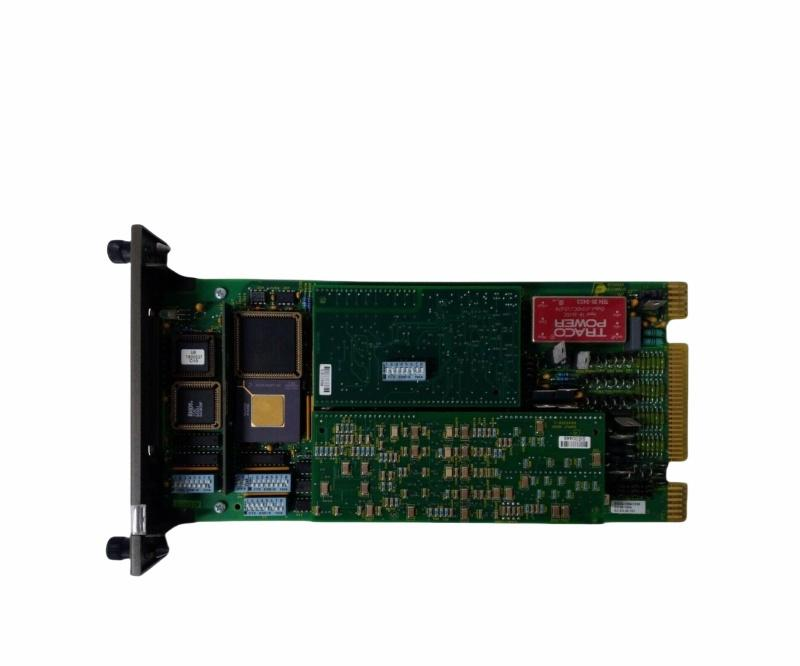
The ABB INIIL02-L INFI-NET to INFI-NET Local Interface strengthens communication between two INFI-NET segments while ensuring fast data exchange, consistent network behavior, and streamlined local interconnection. Since modern industrial systems require synchronized, scalable, and efficient communication layers, the INIIL02-L enables smooth interaction between distributed controllers across separate INFI-NET domains. Moreover, it supports high-speed data flow that enhances visibility, diagnostic accuracy, and operational reliability across the entire automation platform.
As industrial processes grow more complex, communication integrity becomes critically important. Therefore, the INIIL02-L offers a stable and intelligent data routing mechanism that sustains dependable throughput under heavy network load. Additionally, the module includes structured communication protocols, intuitive diagnostic indicators, and a robust hardware design that ensures long-term reliability in demanding industrial environments. With its efficient architecture and advanced processing functions, the INIIL02-L provides essential support for distributed control, event handling, system coordination, and advanced automation strategies.
Core Functional Characteristics
1. INFI-NET to INFI-NET Local Bridging
The INIIL02-L links two INFI-NET segments through a high-integrity interface bridge. Because of this, data flows smoothly between controllers, gateways, servers, and operator stations across both networks. Moreover, the module ensures consistent addressing and synchronized message routing.
2. High-Speed Data Handling
Since industrial applications demand real-time data, the module processes communication frames quickly and organizes message sequences efficiently. Consequently, the network experiences minimal latency and maintains steady throughput when traffic levels rise.
3. Structured Communication Protocol Support
The INIIL02-L works within the established INFI-NET protocol architecture, which supports deterministic communication, time-stamped values, error-managed frames, and structured data groups. Therefore, users maintain operational consistency across multiple network segments.
4. Comprehensive Diagnostic Visibility
Front-panel indicators reveal link status, communication quality, processor activity, and error conditions. Technicians interpret these signals easily, so troubleshooting becomes faster and more efficient.
5. Seamless INFI-NET System Integration
The module integrates into ABB Bailey INFI-NET installations without requiring major reconfiguration. Moreover, it interacts smoothly with controllers, gateways, engineering tools, and HMI/SCADA platforms.
Technical Specifications and Parameters
Electrical Requirements
Power Supply: 5 VDC regulated
Power Consumption: Typically 6–8 W
Backplane Interface: Fully compatible with ABB INFI-NET system bus
Electrical Protection: Integrated circuitry that improves noise immunity and stabilizes voltage levels
The module’s electrical design supports high reliability even when voltage conditions fluctuate slightly.
Communication Specifications
Network Compatibility
Designed for INFI-NET to INFI-NET local communication
Supports full-duplex and continuous bi-directional data transfer
Maintains synchronized communication frames across network segments
Data Transfer Behavior
Real-time updates optimized through structured message handling
Intelligent buffering improves stability during peak network activity
CRC-based error-checking ensures clean and accurate data flow
Prioritized frame sequencing supports critical process data
Network Timing
Supports INFI-NET timing structures
Maintains consistent time-tag propagation for event-driven processes
Coordinates messaging to avoid collision conditions between segments
Protocol Handling
Enhanced routing logic for multi-segment INFI-NET systems
Stable frame ordering that supports Sequence-of-Events and fast-scan loops
Structured handling of controller messages, system alarms, and diagnostics
Environmental and Mechanical Characteristics
Operating Environment
Operating Temperature: 0°C to +60°C
Storage Temperature: –40°C to +85°C
Humidity Range: 5–95% non-condensing
EMI/EMC: Complies with industrial noise and electromagnetic standards
Vibration Resistance: Suitable for cabinet-mounted control hardware
Physical Structure
Standard ABB/Bailey module form factor
Rack-mounted installation
Passive convection cooling through airflow channels
Industrial-grade PCB materials and reinforced connectors
Build Quality
Protective board coating improves environmental resistance
High-reliability components ensure long operating life
Mechanical design supports service-friendly installation and replacement
Internal Architecture
Processing Resources
Dedicated communication processor designed for INFI-NET routing
Efficient task scheduling that prioritizes critical data
Stable execution for message filtering, sequencing, and error tracking
Memory Architecture
Firmware Memory: Flash/EPROM storing communication logic
RAM: Manages temporary message buffers
Diagnostic Memory: Captures status logs and error records
Internal Monitoring Systems
Watchdog circuits that maintain continuous processor activity
Voltage and thermal monitoring structures
Protective logic that prevents system interruptions during overloads
Software and Configuration
Configuration Tools
Works with ABB Bailey engineering software
Supports dynamic configuration of network addresses
Maintains compatibility with supervisory systems and historian structures
Data Organization Features
Structured variable mapping between INFI-NET segments
Consistent naming and addressing across distributed nodes
Support for large data structures and hierarchical plant models
Diagnostic and Maintenance Tools
Clear fault logs accessible from engineering terminals
Indicators that highlight communication integrity issues
Efficient reset and recovery functions that shorten downtime
Application Scenarios
1. Large Distributed Control Networks
Plants with multiple INFI-NET segments benefit from unified data flow, which strengthens overall system coordination and reduces communication bottlenecks.
2. Power Generation Facilities
The INIIL02-L supports high-speed exchanges needed for turbine control, boiler systems, load coordination, and safety-related monitoring.
3. Chemical and Petrochemical Plants
Since processes require rapid and precise data availability, the module supports reliable interactions between remote units and centralized stations.
4. Industrial SCADA Systems
SCADA applications rely on continuous real-time data. The INIIL02-L ensures accurate transmission of events, analog values, alarm statuses, and operational metrics.
5. High-Availability Automation Systems
Redundant network architectures use the module to maintain smooth communication when segments operate independently or require coordinated synchronization.
Advantages of INIIL02-L
1. Strong Communication Stability
The module organizes message routing intelligently, so high-density networks operate without congestion.
2. Scalable Architecture
Users expand INFI-NET systems easily by adding new segments connected through multiple INIIL02-L modules.
3. High Environmental Tolerance
The robust build supports long-term industrial deployment in harsh environments.
4. Enhanced System Visibility
Technicians monitor the network efficiently due to clear diagnostic outputs, structured logs, and predictable communication behavior.
5. Efficient Handling of Large Data Loads
The internal processing logic helps the network maintain stable performance, even when thousands of variables update simultaneously.
Conclusion
The ABB INIIL02-L INFI-NET to INFI-NET Local Interface delivers the communication reliability, processing performance, and network clarity that modern industrial automation requires. Its optimized data routing, diagnostic transparency, environmental durability, and scalable architecture ensure that both small-scale and large-scale distributed systems operate efficiently. Moreover, its robust integration capabilities support advanced control strategies, real-time monitoring, event management, and long-term plant reliability.
Reviews
There are no reviews yet.