

Introduction
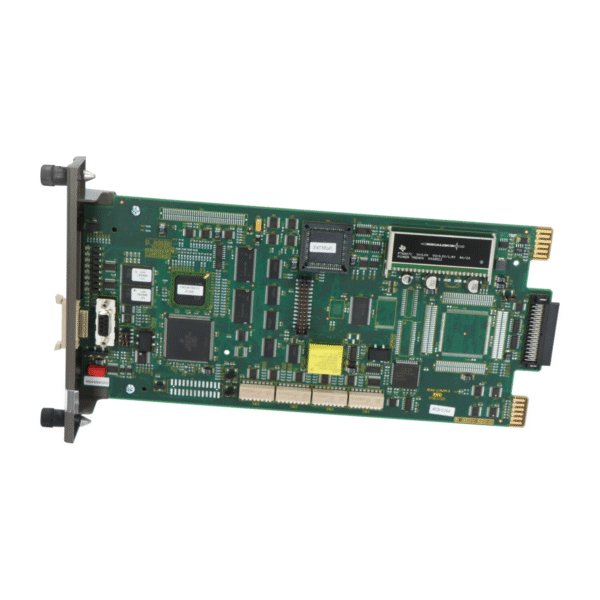
The ABB SPICI03-SCIL INFI-NET to Computer Interface strengthens industrial communication by creating a dependable and efficient data bridge between INFI-NET controllers and computer-based systems. Since modern plants rely on real-time insights, the module supports high-speed data transfer that enhances visibility, diagnostics, and operational decision-making. Moreover, the SPICI03-SCIL ensures consistent performance across complex distributed environments, and its advanced communication structure helps engineers maintain reliable network behavior even when traffic increases sharply.
As industries pursue higher accuracy and faster response times, the SPICI03-SCIL delivers streamlined workflows that simplify data exchange and strengthen information consistency. Furthermore, the module integrates tightly with ABB’s INFI-NET architecture, so users experience smooth compatibility with controllers, operator stations, engineering tools, and historical data platforms. Its internal processor organizes messages efficiently, and this efficiency helps users maintain stable operation without unnecessary delays. Therefore, the SPICI03-SCIL stands out as a vital component for industries that require uninterrupted, precise, and synchronized communication.
Core Characteristics of SPICI03-SCIL
1. Real-Time Data Exchange
The interface supports continuous real-time data transfer between INFI-NET and host computer systems. Additionally, it organizes the data flow to maintain consistent update speed, so engineers receive timely values for analysis and decision-making.
2. Enhanced Protocol Coordination
The SPICI03-SCIL communicates with INFI-NET controllers using ABB’s structured protocol framework. Consequently, the system processes commands, events, time-tagged values, and control sequences efficiently, while the SCIL-specific capabilities allow additional customization for specialized plant applications.
3. High Throughput and Optimized Processing
Since industrial loads vary, the module includes optimized algorithms that adjust message handling to maintain a stable throughput. Moreover, its internal memory buffers messages intelligently so no data drops interrupt the communication stream.
4. Diagnostic Visibility
Clear front-panel indicators reveal communication quality, network status, internal processing states, and system condition. Consequently, technicians recognize abnormal patterns quickly, and this efficiency shortens maintenance time.
5. Reliable Integration with Computer Systems
The SPICI03-SCIL interacts with host computers through ABB-defined interface functions that support engineering software, historians, SCADA systems, and advanced analytics platforms. Moreover, it ensures accurate data mapping across multiple applications.
Technical Specifications and Parameters
Electrical and Power Characteristics
Input Power Requirement: 5 VDC regulated
Typical Power Consumption: 6–8 W
Backplane Compatibility: Fully compatible with INFI-NET system backplane
Internal Protection: Circuit protection structures that stabilize voltage and prevent unwanted interference
The power design supports stable communication even during high-frequency data bursts, and its low operating consumption contributes to long-term efficiency.
Communication and Networking Parameters
Supported Network
ABB INFI-NET process control network, enabling full-duplex data communication.
Computer Communication Framework
Custom ABB communication layer designed for SCIL-based applications
Supports structured message frames for commands and process values
Enhanced processing for SCIL-specific logic applications
Supports direct interaction with engineering, historian, and industrial AI platforms
Transmission Behavior
Real-time streaming of process values, events, diagnostics, and timestamps
Frame sequencing controls ensure ordered communication
Error-checking functionality retains clean and accurate output
Intelligent buffering for high-traffic scenarios
Optimized throughput across large, distributed networks
Time Synchronization
Picks up network-wide timestamp information to ensure consistent event ordering
Delivers synchronized values to all connected software systems
The module maintains communication clarity even when multiple controllers interact with the same interface.
Environmental and Physical Specifications
Operating Environment
Operating Temperature: 0°C to +60°C
Storage Temperature: –40°C to +85°C
Relative Humidity: 5–95%, non-condensing
EMC Tolerance: Industrial-grade immunity against electrical noise
Vibration Rating: Suitable for cabinet-mounted control system environments
Physical Dimensions
Standard ABB / Bailey module form factor
Convection-cooled through rack airflow
Rack-mounted installation with secure locking edge connector
Mechanical Material Construction
Industrial-grade circuit board materials
Reinforced connectors to support long operating cycles
Protective coating on sensitive components to increase reliability in harsh environments
Internal Hardware Architecture
Processing Unit
High-reliability communication processor
Fast execution for message sequencing, filtering, and routing
SCIL-enhanced logic support
Memory Resources
Program Memory: Flash/EPROM for firmware and communication logic
Data Memory: RAM dedicated to buffering messages and error logs
Diagnostic Memory: Stores error entries, status snapshots, and internal counters
System Monitoring
Internal watchdog structure that maintains stable behavior
Monitoring circuits track voltage, temperature, and communication health
Detailed diagnostic messages available through engineering tools
Software Integration and Configuration
Configuration Tools
Fully compatible with ABB automation engineering suites
Supports SCIL-integrated data models
Enables flexible mapping of controller variables to computer applications
Data Organization
Uses advanced field-mapping functions
Supports hierarchical data structures for large process models
Maintains consistent variable naming across entire engineering environment
Event and Command Handling
Accepts computer-originated control commands
Transfers plant events with accurate timestamps
Organizes event data to support sequence-of-events and analysis tools
Firmware
Secure, service-based firmware upgrade procedure
Backward-compatible logic ensures stable system continuity
Application Scenarios
1. Power Generation Plants
The module helps centralize monitoring and supports predictive maintenance workflows. Moreover, it strengthens the link between INFI-NET controllers and high-performance computing servers that run plant diagnostics.
2. Chemical and Petrochemical Facilities
Since chemical operations demand precise timing and continuous updates, the SPICI03-SCIL supports fast process value transfer and reliable historian logging.
3. SCADA and Distributed Control Centers
The module helps SCADA stations interpret plant-wide values, event sequences, and alarms. Consequently, operators receive real-time insight across multiple production units.
4. Process Optimization and AI Integration
Advanced optimization tools rely on stable data flow. Therefore, the SPICI03-SCIL ensures that analysis engines, digital twins, and AI models process accurate information.
5. Engineering Workstations
Engineers use the interface to fine-tune control loops, analyze performance, and validate logic. Furthermore, the SCIL-enhanced structure supports complex diagnostic workflows.
Advantages of SPICI03-SCIL
1. Strong Communication Stability
Since the module organizes communication logically and filters unnecessary frames, users experience clean, uninterrupted data exchange.
2. Easy Integration
Whether connecting engineering tools, SCADA systems, or databases, the SPICI03-SCIL integrates smoothly into existing environments without additional complexity.
3. SCIL-Enhanced Functionality
The SCIL-specific capabilities offer more control, improved logic processing, and flexible data structuring that standard modules cannot provide.
4. Long-Term Operational Reliability
The durable hardware, strong diagnostics, and environmental resistance support continuous multi-year operation.
5. Efficient Handling of Large Data Structures
The interface arranges data for large, distributed networks and keeps everything synchronized, even during peak demand.
Conclusion
The ABB SPICI03-SCIL INFI-NET to Computer Interface delivers the communication stability, processing performance, and SCIL-enhanced capabilities needed for advanced industrial applications. Its real-time data transfer, clear diagnostics, reliable environmental tolerance, and seamless computer integration make it a critical component across power, chemical, manufacturing, and SCADA-based environments. Moreover, its scalable design and strong communication integrity ensure long-term operational continuity, supporting modern demands for precision, speed, and automation intelligence.
Reviews
There are no reviews yet.