
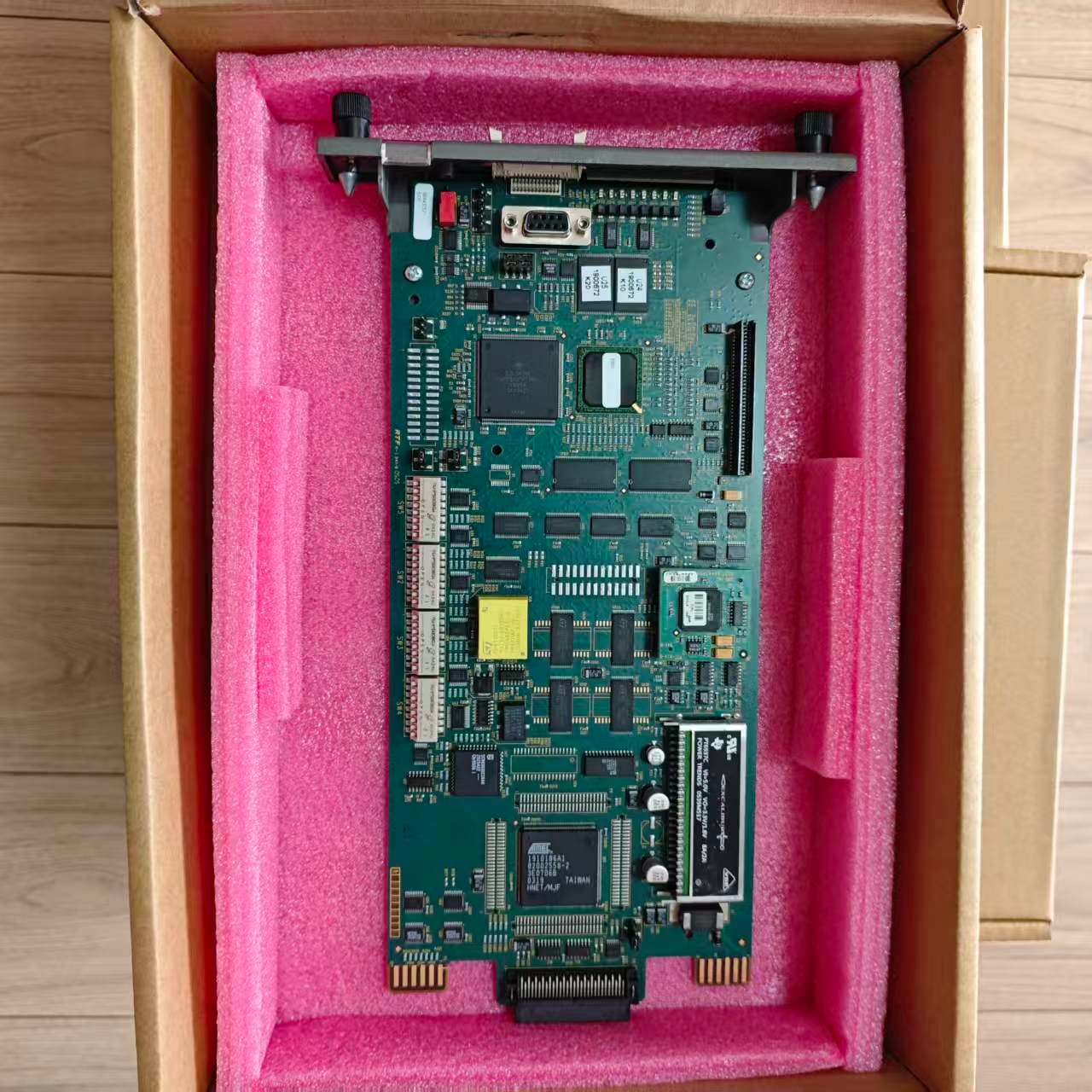

The ABB P-HC-BRC30000000 Control Module, widely known as the ABB BRC300, strengthens high-performance distributed control environments, and it consistently supports complex automation systems that require fast processing, enhanced reliability, and continuous data handling. As modern plants expand in scale and complexity, the BRC300 introduces robust computing capability, and it synchronizes critical operations across interconnected control layers. Moreover, it improves system visibility, and it empowers engineers to manage sophisticated industrial processes with precision and confidence.
Because industrial systems rely heavily on deterministic controller behavior, the BRC300 operates with fully optimized internal logic, and it handles large volumes of real-time instructions without delay. Its powerful architecture supports multiple process loops, advanced control strategies, network communications, and integrated diagnostics. Consequently, facilities achieve consistent output quality, and they reduce operational risk across mission-critical processes.
1. System Architecture and Functional Role
The P-HC-BRC30000000 module operates as the primary processing engine in ABB Bailey and ABB INFI 90 distributed control environments. It coordinates field input signals, regulatory control algorithms, inter-module communications, and operator interface exchanges. Additionally, it centralizes supervisory sequences, and it ensures synchronized decision-making across multiple control nodes.
Because modern automation structures require scalable control platforms, the BRC300 accommodates extensive process configurations, and it integrates seamlessly with legacy, hybrid, and upgraded ABB infrastructures. It supports large node counts, and it manages wide process areas such as chemical refining, power generation, steel processing, water treatment, and advanced manufacturing. Furthermore, it maintains stable execution cycles, and it eliminates timing drift in complex loop clusters.
2. High-Speed Processing and Instruction Handling
The BRC300 features an advanced microprocessor core, and it executes regulatory logic, mathematical operations, and supervisory instructions with exceptional speed. It supports multi-threaded control paths, and it handles distributed I/O messaging without interrupting main control cycles. This ensures that fast-acting applications—such as turbine control, high-speed dosing, combustion control, and precision temperature regulation—operate smoothly and consistently.
Additionally, the BRC300 optimizes CPU load distribution, and it minimizes queue buildup even during peak system demand. This architecture improves deterministic behavior, and it guarantees predictable process responses across all control layers. As a result, operators gain stable control performance, and they maintain full oversight even when plant throughput increases sharply.
3. Memory Structure and Data Integrity
The module includes segmented memory banks, and it protects critical variables, logic blocks, and parameter sets with internal integrity checking. Its memory architecture supports rapid reads and writes across configuration databases, system files, and real-time control data. Moreover, it ensures that data transfer between processor logic and I/O structures remains secure, and it reduces the chance of corruption during high-load cycles.
Backup memory retention features preserve essential configuration information during power changes, and they maintain full controller readiness even after extended maintenance cycles. Consequently, plant engineers restart processes efficiently, and they avoid unnecessary reconfiguration after scheduled or unscheduled downtime.
4. Communication Interfaces and Network Performance
The BRC300 integrates seamlessly with ABB’s communication frameworks, including:
INFI-NET
Plant-wide system buses
Controller-to-controller messaging paths
Redundant loop communication architectures
It regulates network messages through high-integrity protocols, and it ensures synchronized data exchange across all control units. Because communication health directly impacts overall plant stability, the module supports continuous message arbitration, and it corrects network anomalies before they influence control performance.
Furthermore, it coordinates communication with multiple subsystems, including:
HMI workstations
Engineering consoles
Historian servers
Intelligent field devices
Remote I/O stations
Through this synchronized communication design, the BRC300 strengthens operational awareness, and it supports unified decision-making across the plant.
5. Diagnostic Capabilities and Operational Visibility
The BRC300 enhances system transparency by offering comprehensive diagnostics. It monitors processor load, memory status, communication health, I/O responsiveness, and internal temperature conditions. It records detailed event logs, and it communicates diagnostic results to higher-level maintenance platforms.
Because maintenance predictability improves overall reliability, the module provides early warnings for:
Communication congestion
Abnormal execution cycles
Internal voltage irregularities
Module-to-backplane connection issues
Over-threshold thermal conditions
These insights optimize preventive maintenance routines, and they reduce the likelihood of sudden process interruptions.
6. Electrical and Power Characteristics
The P-HC-BRC30000000 draws its power from the ABB Bailey backplane, and it uses highly regulated internal circuits for stable operation. The module maintains low power consumption, and it distributes thermal load efficiently across its PCB. Additionally, it incorporates surge-tolerant entry lines, and it protects internal logic from transient power disturbances.
Voltage regulation circuits maintain consistent operational margins, and they provide noise suppression that improves signal stability within the control chassis. As a result, the BRC300 operates safely within environments that contain heavy electrical equipment, high voltage switching assemblies, and large rotating machinery.
7. Mechanical Construction and Environmental Robustness
The BRC300 follows ABB Bailey’s proven module design standards, and it fits securely into compatible system bays. It uses a reinforced PCB structure, and it maintains mechanical integrity during long-term industrial operation. Because many installations involve compressor systems, turbines, heavy conveyors, and large boilers, the module withstands vibration loads commonly seen in these environments.
Additionally, the card supports extended industrial temperature ranges. Its components maintain performance stability across ambient changes, humidity fluctuations, and typical airborne dust levels present in many industrial plants. Oxidation-resistant connectors ensure reliable long-term electrical contact, and they simplify periodic servicing.
8. Control Function Execution and Algorithm Support
The BRC300 supports advanced control techniques commonly used in modern DCS installations, such as:
PID regulatory loops
Feedforward control
Cascade architectures
Boiler and turbine sequencing
Safety-critical interlocks
Batch and recipe management
Combined cycle plant coordination
Because these control strategies often require precise timing, the module ensures that each logic path executes at consistent intervals. Furthermore, engineers can implement custom control structures, and they can scale algorithm complexity without reducing system responsiveness.
9. Compatibility and Lifecycle Extension
The P-HC-BRC30000000 module integrates into legacy ABB Bailey systems, and it supports modernization programs that extend system life without requiring complete platform replacement. Plants upgrade hardware incrementally, and they maintain compatibility with mission-critical control software already deployed.
The BRC300 also synchronizes with multiple generations of ABB controllers. This interoperability reduces transition risk, and it supports long-term digital transformation strategies across power generation, petrochemical, oil and gas, paper mills, and heavy manufacturing.
10. Key Parameters and Specifications
| Parameter | Detail |
|---|---|
| Module Type | Central Control Processor Module |
| Series | ABB Bailey / INFI 90 |
| Power Source | Backplane supplied, regulated internal power |
| Processing Core | High-performance industrial CPU |
| Memory Structure | Segmented architecture with data integrity protection |
| Communication Support | INFI-NET and ABB plant communication systems |
| Diagnostics | Full module health monitoring and event reporting |
| Environmental Tolerance | Industrial-grade temperature, vibration, humidity resilience |
| Mechanical Format | Reinforced PCB, standard ABB form factor |
| Application Range | Process control, supervisory automation, distributed control |
| Redundancy Support | Compatible with dual-loop and redundant configurations |
Conclusion
The ABB P-HC-BRC30000000 (BRC300) Control Module delivers high-reliability computing, synchronized communication, and deep diagnostic intelligence for advanced industrial automation systems. It supports complex control strategies, and it ensures stable performance across diverse plant environments. Because industrial facilities demand continuous uptime, the BRC300 enhances system availability, reduces operational risk, and strengthens long-term infrastructure stability. Its powerful architecture, environmental durability, and full compatibility with ABB Bailey ecosystems make it a central component for critical control operations worldwide.

Reviews
There are no reviews yet.